Thursday, December 22, 2011

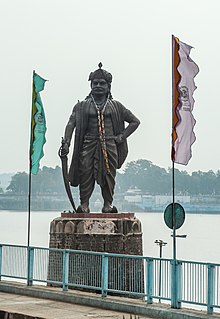
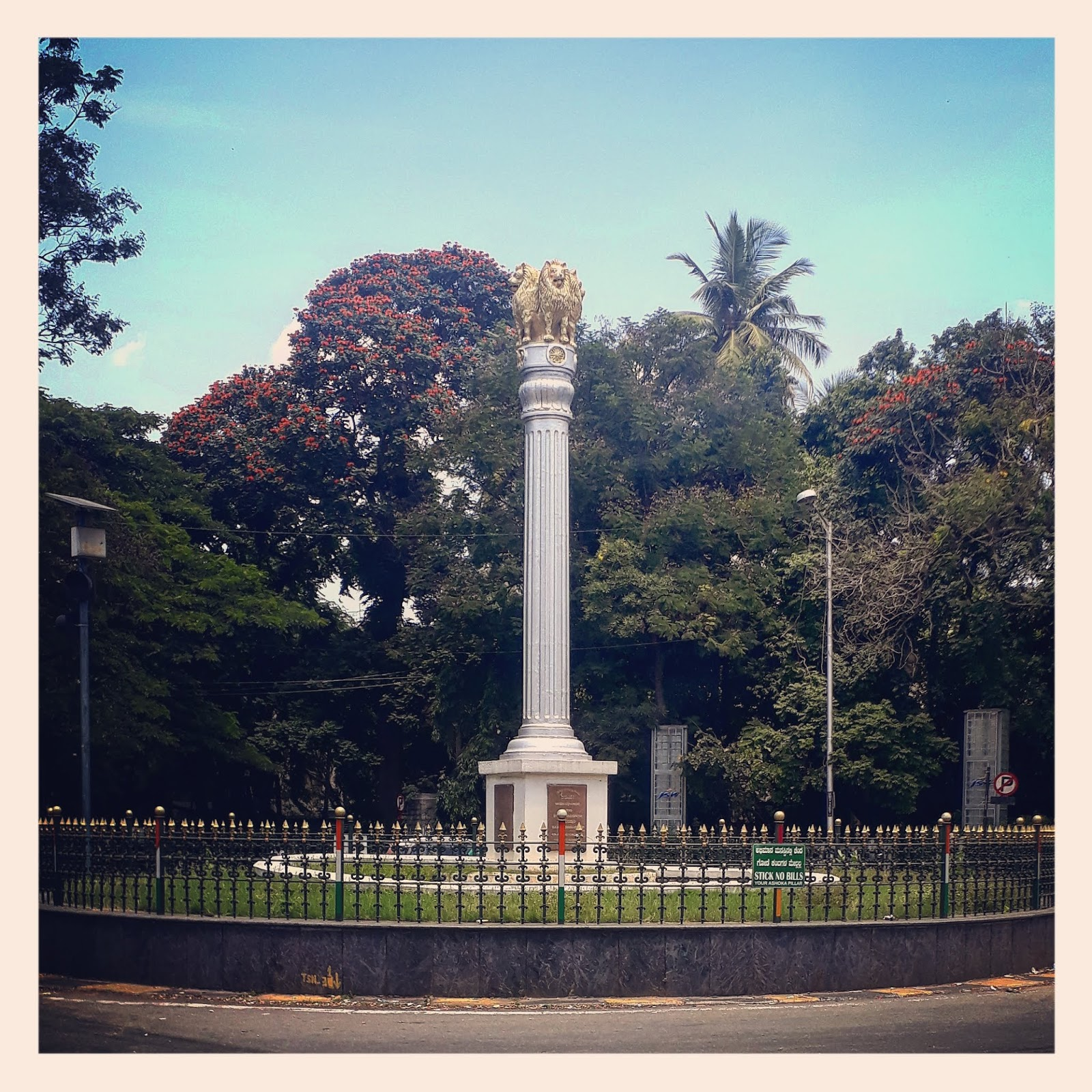
Poona: Aga Khan Palace


The Aga Khan Palace was built in the year 1892 by Sultan Muhammed Shah, Aga Khan III in Pune. Since then it is one of the biggest landmarks in Indian history. The Aga Khan Palace of Pune was an act of charity by the Sultan who wanted to help the poor in the neighboring areas of Pune who were drastically hit by the famine.
Aga Khan Palace is one of the finest pieces of architectural beauty in the western India. The exquisite palace is surrounded by the lavish green gardens all around. Aga Khan Palace in Pune also houses some lavishly decorated guest rooms and suites which take you back to the royal past of the heritage building.
Historically, Aga Khan Palace of Pune holds great significance as from 9 August 1942 to 6 May 1944, this palace was the prison for Mahatama Gandhi, his wife Kasturba and his secretary Mahadev Bhai Desai though the last two died away in between their captivity at the Aga Khan Palace at Pune. Both of them have memorials in their name in the same complex near Mula river.

Friday, September 30, 2011

Nagore: Darga Sheriff


The World Famous Muslim Pilgrim centre Nagore Dargah Located in INDIA / Tamil Nadu.
The tomb is almost more than 500 years old and is topped by a golden dome and flanked by 5 minarets. It is just 4 km to the north of Nagapattinam. Nagore is a town in the Nagapattinam District, Tamil Nadu, India. A prominent five-acre dargah (Muslim shrine) dedicated to the 16th century saint Nagore Andavar (literally "the Lord of Andavar"; also popularly called Meeran Sahib or Qadir Wali) is located there, and serves as a pilgrim center. The 14-day Kandhuri Urs (also spelled Kandoori or Kandhoori) festival, dedicated to the saint, is held there annually.
This cancellation was introduced on 8.10.1976
* This cancellation is no longer Available.

Sriharikota: Antenna


Sriharikota is a barrier island off the coast of the southern state of Andhra Pradesh in India. It houses India's only satellite launch centre in the Satish Dhawan Space Centre (also known as SHAR) and is used by the Indian Space Research Organisation to launch satellites using multi-stage rockets such as the Polar Satellite Launch Vehicle and the Geosynchronous Satellite Launch Vehicle.
Sriharikota separates the Pulicat Lake from the Bay of Bengal, and is home to the town of Pulicat. It is in Sri Amarajeevi Potti Sri Ramulu Nellore district in Andhra Pradesh.
The cancellation depicts Antenna and was introduced on 20.04.1976
* This cancellation is no longer available.

Thursday, September 29, 2011

Srisailam: Mallikarjunaswamy Temple


Srisailam is a holy town and mandal, situated in Nallamala Hills of Kurnool district, Andhra Pradesh, India. It is located on the banks of River Krishna, about 232 km south of Hyderabad.
Bhramaramba Mallikarjunaswamy Temple dedicated to Lord Mallikarjuna Swamy (a form of Shiva) and Devi Bhramaramba (a form of Parvathi) is located here and it is one of the 12 Jyotirlinga temples dedicated to Lord Shiva.
The cancellation depicts Gopura of the Temple.
* This cancellation is no longer available

Hyderbad: Charminar


Charminar (four towers) is an iconic structure located in Hyderabad, India. Built in 1591 AD, with four ornate minarets supported by four grand arches, it has become the global icon of Hyderabad and is listed among the most recognized structures of India. The Charminar, is located on the east bank of Musi river, in the North East lies the Laad Bazaar and in the west end lies the granite made richly ornamented Mecca Masjid.
Sultan Muhammad Quli Qutb Shah, the 5th ruler of the Qutb Shahi dynasty built Charminar in 1591 AD, shortly after he had shifted his capital from Golkonda to what is now known as Hyderabad. He built this famous structure to commemorate the elimination of a plague epidemic from this city.
* This cancellation is no longer available.

Hyderabad: Osmania University


Osmania University is a public university situated in the city of Hyderabad in Andhra Pradesh, India. It is named after the Last Nizam of Hyderabad, Mir Osman Ali Khan, who is the founder of this university. It is one of the oldest modern universities in India. It was the first Indian University to have Urdu language as medium of instruction. It is one of the largest university systems in the subcontinent with over 300,000 students on its various campuses and affiliated colleges. It is particularly well known for its Arts, Sciences, Commerce, Engineering and Technology departments.
Founded in 1918 by the Seventh Nizam of Hyderabad state, Nawab Mir Osman Ali Khan, higher learning in India, the third oldest in southern India and the first to be established in the erstwhile princely State of Hyderabad.
The cancellation depicts Arts college.
* This cancellation is no longer available

Wednesday, September 28, 2011

Pondicherry: Aayi Mandapam


Aayi Mandapam, also known as the Park Monument, is one of the attractive monument in Pondicherry situated at the midst of picturesque Government Park (Bharathi Park). Built in the 16th century during the period of Napoleon III in France and is named after a renowned courtesan named Aayi.

Sanchi- Sanchi Stupa


Sanchi is a small village in Raisen District of the state of Madhya Pradesh, India, it is located 46 km north east of Bhopal, and 10 km from Besnagar and Vidisha in the central part of the state of Madhya Pradesh. It is the location of several Buddhist monuments dating from the 3rd century BCE to the 12th century CE and is one of the important places of Buddhist pilgrimage. Toranas surround the Stupa and they each represent love, peace, trust, and courage.
The 'Great Stupa' at Sanchi was originally commissioned by the emperor Ashoka the Great in the 3rd century BCE. Its nucleus was a simple hemispherical brick structure built over the relics of the Buddha. It was crowned by the chatra, a parasol-like structure symbolising high rank, which was intended to honour and shelter the relics.
Today, around fifty monuments remain on the hill of Sanchi, including three stupas and several temples. The monuments have been listed among the UNESCO World Heritage Sites since 1989.
A British officer in 1818, General Taylor, was the first known Western historian to document (in English) the existence of Sanchi. Amateur archaeologists and treasure hunters ravaged the site until 1881, when proper restoration work was initiated. Between 1912 and 1919 the structures were restored to their present condition under the supervision of Sir John Marshall.

Wednesday, September 7, 2011

Ajmer: Prithviraj Chauhan


Prithvi Raj III, commonly known as Prithviraj Chauhan (1149-1192 CE), was a king of the Hindu Chauhan (Chauhamana) dynasty, who ruled the kingdom of Ajmer and Delhi in northern India during the latter half of the 12th century. He succeeded to the throne in 1169 CE at the age of 20, and ruled from the twin capitals of Ajmer and Delhi which he received from his maternal grandfather Ballal Sena of the Sena Dynasty in Bengal. He controlled much of present-day Rajasthan and Haryana, and unified the Rajputs against Muslim invasions. Prithviraj Chauhan defeated the Muslim ruler Shahabuddin Muhammad Ghori in the First Battle of Tarain in 1191. Ghauri attacked for a second time the next year, and Prithviraj was defeated and captured at the Second Battle of Tarain (1192). Sultan Ghauri took Prithviraj to Ghazni, where he was executed. After his defeat Delhi came under the control of Muslim rulers.
Post Master
Ajmer-305001
Rajasthan

Tuesday, September 6, 2011

Poona: Shaniwar Wada


Shaniwarwada is a palace fort in the city of Pune in Maharashtra, India. Built in 1736, it was the seat of the Peshwa rulers of the Maratha Empire until 1818 when the Peshwas surrendered to the British. The fort itself was largely destroyed in 1828 by an unexplained fire, but the surviving structures are now maintained as a tourist site.
Post Master
Shaniwaepeth PO- 411030
Pune

Wednesday, August 31, 2011

Srirangapattanna: Sword and Headgear of Tippu Sultan

Type 1


Tipu Sultan (November 1750, Devanahalli – 4 May 1799, Seringapatam), also known as the Tiger of Mysore, was the de facto ruler of the Kingdom of Mysore. He was the son of Hyder Ali, at that time an officer in the Mysorean army, and his second wife, Fatima or Fakhr-un-nissa. He was given a number of honorific titles, and was referred to as Sultan Fateh Ali Khan Shahab, Tipu Saheb, or Bahadur Khan Tipu Sultan.

This cancellation representing sword and Headgear of Tippu Sultan was introduced on 20.06.1987
Post Master
Srirangapattanna-571438

Type 2

Prior to Sword and Head gear cancellation a Postmark representing Gumbaz was used. This cancellation was introduced on 20.10.1978 and used till 1986. Gumbaz is the burial chamber of Tipu Sultan, his father Haider Ali and mother Fatima Begum. It is built on a lifted platform and is circumvented by various other tombs of his relatives and nobles. The Gumbaz has magnificent ebony doors decorated with ivory which was presented by Lord Dalhousie. The interior walls are covered with lacquer Tiger stripes which is Tipu's favourite. A corridor affirmed by pillars of black amphibole walls Gumbaz.
Masjid-e-aksa a mosque is situated next to the Gumbaz. The Gumbaz is circulated with a beautiful garden and this gives it a beautiful and cool sigh


Tuesday, August 30, 2011

Beypore: Wooden Boat


Beypore is a small coastal census town in Kozhikode district in the state of Kerala, India. The place was formerly known as Beppur / Vadaparappanad.Beppur means the land put or placed. This place also has a small port and a beautiful beach. Beypore port is one of the oldest known ports in Kerala from where trading was done with the Middle East. Beypore is also famous for building wooden ship, it is called Dhow, or Uru in the Malayalam language. These ships are usually bought by arab merchants for trading, fishing and now used as a tourist ships. The ships are moved to the sea by workers known aas the Khalasies.
Cancellation was introduced on 17.05.2006
Post Master
Beypore- 673015

Ernakulam: Lamp


The cancellation depicts lamp used in certain Hindu festival.
Post Master
Philatelic Bureau
Ernakulam

Calicut: Theyyam Dance


Theyyam or Theyyattam or Thira is a popular Hindu ritual form of worship of North Malabar in Kerala state, India, predominant in the Kolathunadu area (consisting of present-day Kasargod, Kannur Districts, Mananthavady Taluk of Wayanad and Vadakara & Koyilandy Taluks of Kozhikode of Kerala state. As a living cult with several thousand-year-old traditions, rituals and customs, it embraces almost all the castes and classes of the Hindu religion in this region. The performers of Theyyam belong to the lower class community, and have an important position in Theyyam. This is unique, since only in Kerala, do both the upper-caste Brahmins and lower-caste tribals share an important position in a major form of worship. The term Theyyam is a corrupt form of Devam or God. People of these districts consider Theyyam itself as a God and they seek blessings from this Theyyam.
Post Master
Philatelic Bureau
Calicut HPO
Calicut

Trivandrum: Kathakali


Kathakali is a highly stylized classical Indian dance-drama noted for the attractive make-up of characters, elaborate costumes, detailed gestures and well-defined body movements presented in tune with the anchor playback music and complementary percussion. It originated in the country's present day state of Kerala during the 17th century[1] and has developed over the years with improved looks, refined gestures and added themes besides more ornate singing and precise drumming.
Philatelic Bureau
Post Master
Trivandrum GPO
Trivandrum

Wednesday, August 10, 2011

Madhur: Sri Anantheshwara Vinayaka Temple


Madhur temple was originally Madhanentheswara (Shiva) Temple and as the lore goes, an old so called "low caste" lady "Madura" discovered an "Udbhava Murthy" (a statue that was not made by a human) of shiva linga.The Ganapathy statue was drawn by a priest's son, a small brahmin boy, on the walls of the Garbhagriha(sanctum sanctorum) while playing. Day by day it became big and fat; so that the boy called Ganapathi as "boddajja" or "bodda ganesha" .The legend of Kumble seme says Tipu Sultan wanted to demolish the temple like Adooru Mahalingeswara temple during his invasion of Coorg , Tulunadu and Malabar. But after drinking water from the well of the temple, he changed his mind on attacking and demolishing the Garbhagudi and marched towards Malabar. But to satisfy his soldiers and Islamic scholars he made a cut with his sword symobolising the attack. The mark is still visible on the building that is built around the temple well.

Madayikonam: Holy cross Church, Mapranam


Mapranam Holy Cross Shrine Church is situated just 20 k.ms. away from Azhikode that has roots to the emergence of Christianity in India. The Church, which is the part of the Irinjalakuda diocese, is historically renowned and noted pilgrim centre ideally located in the enchanting rural ambience of Kerala. It is one of the oldest Churches, found in 928A.D. It was recently renovated (1989) and attracts worshippers beyond the religious barriers. It is perhaps for the first time in the history of the world that a religious sanctum has combined and practiced the cultural, spiritual and ethical values of the different religions - especially Christianity, Hinduism and Islam.
Post Master
Madayikonam- 680712

Ahmedabad ( Gandhi Ashram ): Spinning Wheel


Gandhi Ashram was established by Gandhi on the banks of river Sabarmathi in 1917. This came to be known as Harijan Ashram. The Ashram was established to carry on the search of truth and for creating a non violent group to secure freedom of the country. The ashram was Gandiji's home till 1930 when he left for his historic Dandi March. Since 1930, the ashram is being used mainly as a center of education for Harijan girls. Many of Bapu's personal things like a writing desk, the yarn spun by him and some of his letters are on Display.
Post Master
Gandhi Ashram
Ahmedabad- 380027
The cancellation was introduced on 30.01.1995

Porbander: Keerthi Mandir


The Cancellation shows the house where Mahatma gandhi was born in Porbander on 2nd October, 1989. This place is presently renamed as Keerthi Mandir.
Post Master
Porbander HPO
Porbander- 362650
Cancellation was introduced on 18.04.1992

Tuesday, August 9, 2011

Visakhapatanam: Dolphins nose Lighthouse


The lighthouse stands on the hill range known as Yarada Konda and the portion of the lighthouse site is known as Dolphin’s Nose overlooking the entrance to Visakhapatnam Harbour. Visakhapatnam is a natural Harbour in the back waters formed by Meghadri River and hills around. It is also the East Coast base of the Indian Navy.
The tower is a 19m high Square Masonry Tower (Black & White bands). The light flashes White every 10 Seconds.